- The PEN Weekly
- Posts
- We rushed to keyboards. The research says we shouldn’t have.
We rushed to keyboards. The research says we shouldn’t have.
What handwriting builds that screens don’t.

Andre Violante
January 14, 2026 • Estimated Reading Time: 3 minutes

MAKING IT EASIER TO BE A BETTER TEACHER
We’ve spent years trying to make learning faster.
Faster tools, faster feedback, faster production. But this week’s research suggests we may have rushed one part of the process that actually benefits from slowing down. In this issue, we look at why memorization can still matter, what handwriting does that keyboards don’t, and how to use tech without skipping the foundations that make understanding stick.
Can you feel that? You’re about to become an even better teacher in the next 6 minutes.
🚀 Noteworthy News
🔉But first, a word from today’s sponsor for those that want to start their own newsletter:

Stop planning. Start building. With beehiiv, this the end of the year is a great time to get ahead. Build a website with AI, launch a newsletter in minutes, and start earning through the Ad Network. Use code BIG30 for 30 percent off your first three months. Start building for 20 percent off today.
And now back to making you an even better teacher 👇️
TECH TOOL
Flashcards Can Still Matter
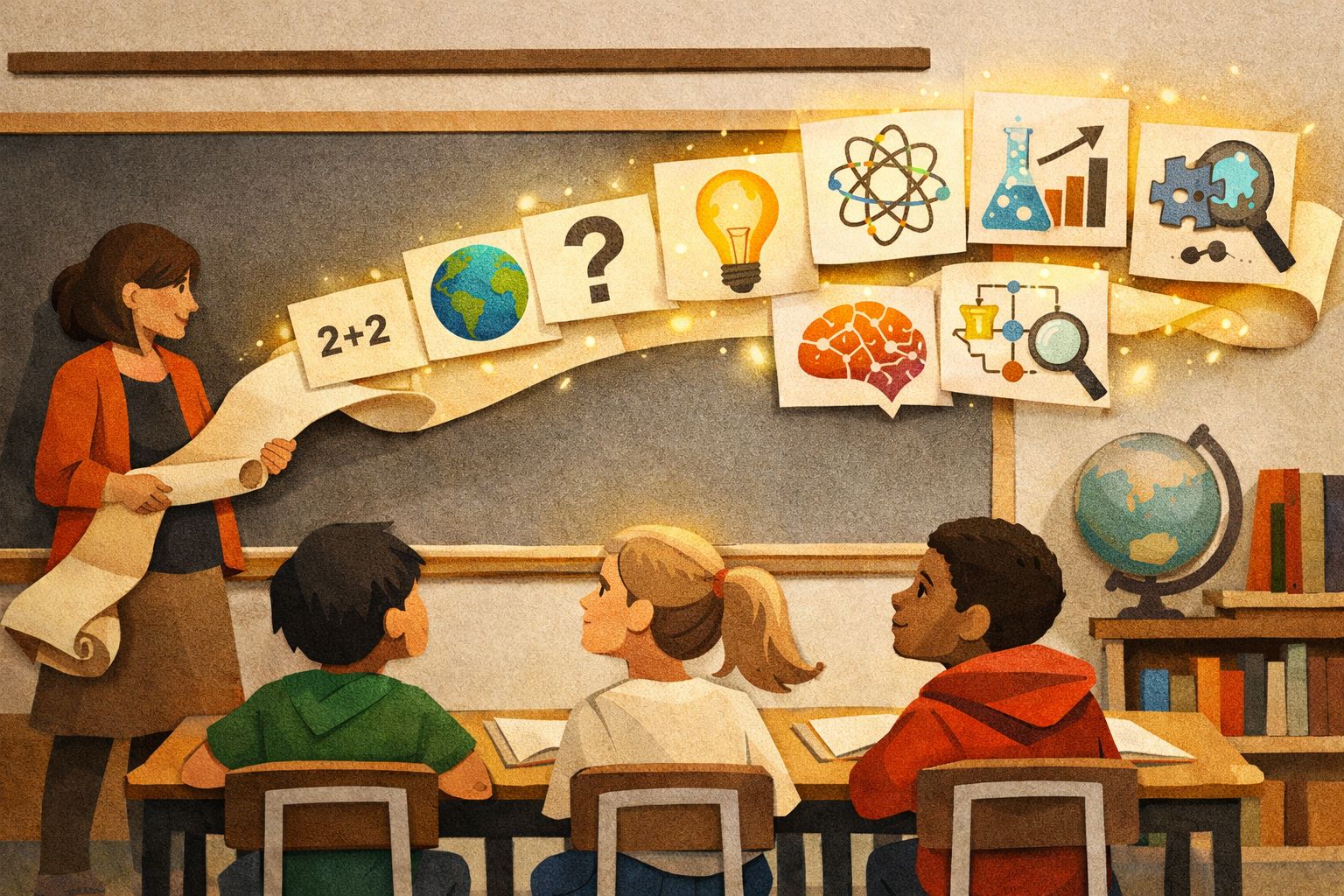
Flashcards sometimes get a bad rap, but memorization is still the first rung of the learning ladder.
New skills require facts before understanding. The problem isn’t flashcards. It’s boring flashcards that stop at recall and never push thinking further.
The Solution: Memrizz
Memrizz is an AI flashcard maker that takes your notes, slides, or text and turns them into smart flashcards automatically. Not just “what is,” but “why,” “how,” and “what if” questions that nudge students toward deeper thinking without us writing every prompt ourselves.
It works on the web, connects with Anki for teachers already living that spaced-repetition life, and costs about the same as a fancy coffee per month. There’s also a free tier to test-drive before committing.
Is This For YOUR Classroom?
If your subject relies on foundational knowledge like languages, sciences, or math, Memrizz fits well. If your class is mostly discussion-based or device-light, it may feel like extra setup for limited payoff.
Strategies That Work:
Fact to Why: Start with recall cards, then assign Memrizz’s deeper prompts for homework.
Student Deck Builders: Let students upload notes and critique the AI’s questions.
Spiral Review: Reuse decks across units to keep old knowledge alive.
Flashcards aren’t outdated. Thoughtless flashcards are. Memrizz helps us keep the first and finally ditch the second.
“Handwriting is more connected to the movement of the heart.”
BRAINY BIT
The Writing Question
In a tech-heavy world, does handwriting still pull its weight?
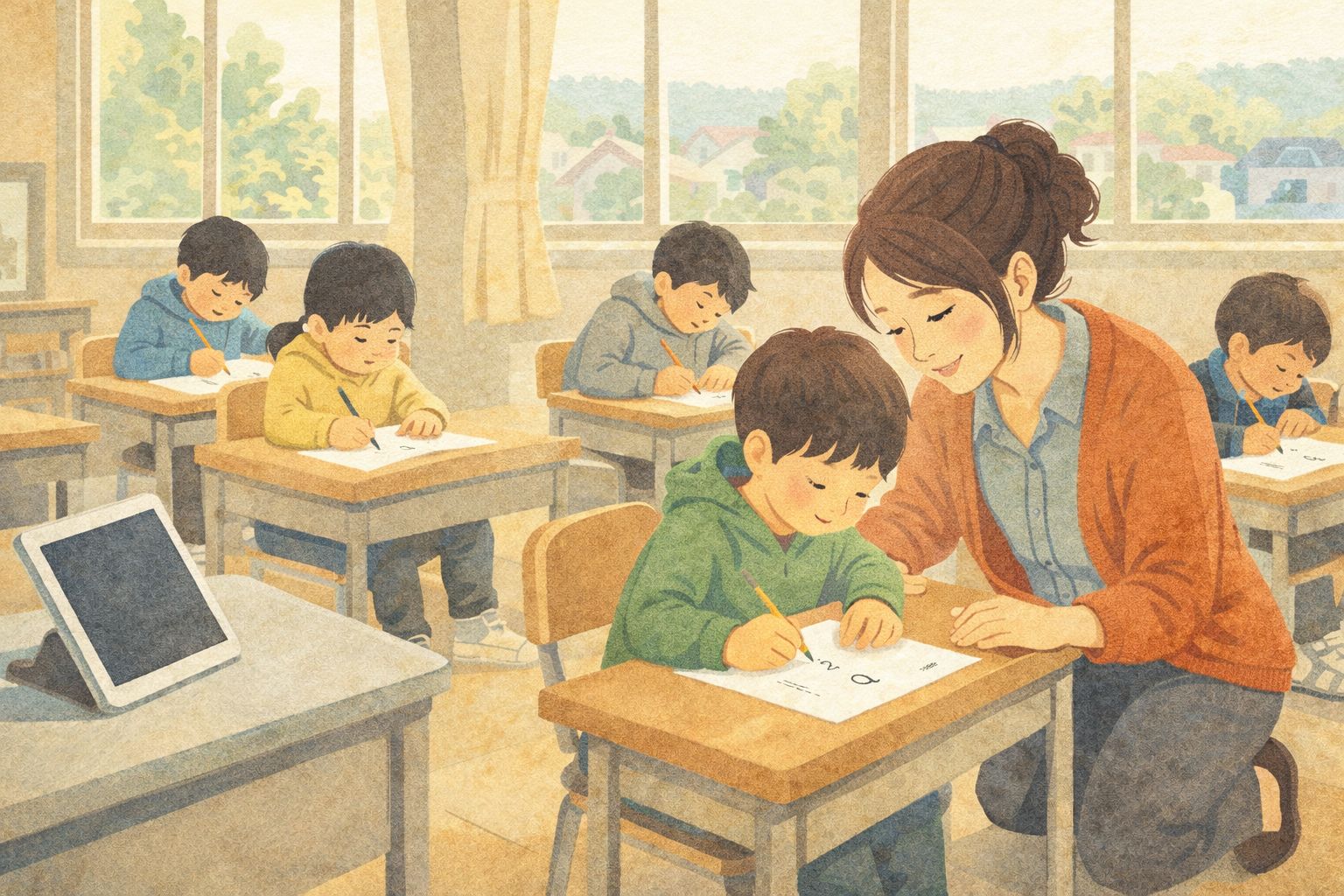
TLDR: In a controlled study with kindergarten students, children who learned letters and words through handwriting consistently outperformed peers who learned by typing. Same content. Same time. Very different outcomes.
The Study: The impact of handwriting
Researchers worked with 50 kindergarteners learning unfamiliar letters and made-up words over three days. Children were randomly assigned to one of four learning methods: copying by hand, tracing, typing with varied fonts, or typing with one consistent font.
After training, students completed tasks that measured letter naming, writing, word reading, spelling, and word recognition. The goal was to isolate whether physical writing and visual variation actually change learning outcomes.
The Results:
Across nearly every task, handwriting beat typing.
Children who wrote by hand were better at naming letters, spelling words, reading new words, and writing them from memory.
Typing groups struggled most with spelling and word writing, suggesting weaker mental representations of letters and letter patterns.
In YOUR Classroom:
As we push digital tools (for good reason), this study reminds us that fundamentals like handwriting don’t disappear; they prepare students to use those tools well.
Here’s how this study might impact your classroom this week:
Strategies That Work:
Write before tech. Build letter and word knowledge by hand before introducing keyboards.
Slow it down. Writing forces attention to letter order and sound, which supports reading.
Teach the tool last. Calculators don’t teach math; keyboards don’t teach writing.
We’re not anti-tech. We’re pro-foundation. This study shows that when it comes to learning to read and write, the pencil (or The PEN 😁) still earns its spot on the desk.
WHAT DO YOU THINK?
We would LOVE to hear from you!
Reply to this email, or send us a message on Instagram! We’re here to walk with you in these crazy times!
Part of what makes The PEN Weekly community so special is the fact that our readers are teachers from around the world! We’re not going to lie, we think that’s pretty darn cool!
We’ll see you again on Monday 🍎
Do you know someone who would appreciate reading the PEN? Share this newsletter with them! Our goal is to reach as many teachers as possible, and to build a community of teachers supporting teachers.
References
Today’s newsletter adapts information from the following sources:
Tech Tool:
Memrizz. (2026). AI Flashcard Maker. Retrieved from https://www.memrizz.com/aiflashcardmaker
Brainy Bit:
Ibaibarriaga, G., Acha, J., & Perea, M. (2025). The impact of handwriting and typing practice in children’s letter and word learning: Implications for literacy development. Journal of Experimental Child Psychology, 253, 106195. doi:10.1016/j.jecp.2025.106195
Reply