

In partnership with


MAKING IT EASIER TO BE A BETTER TEACHER
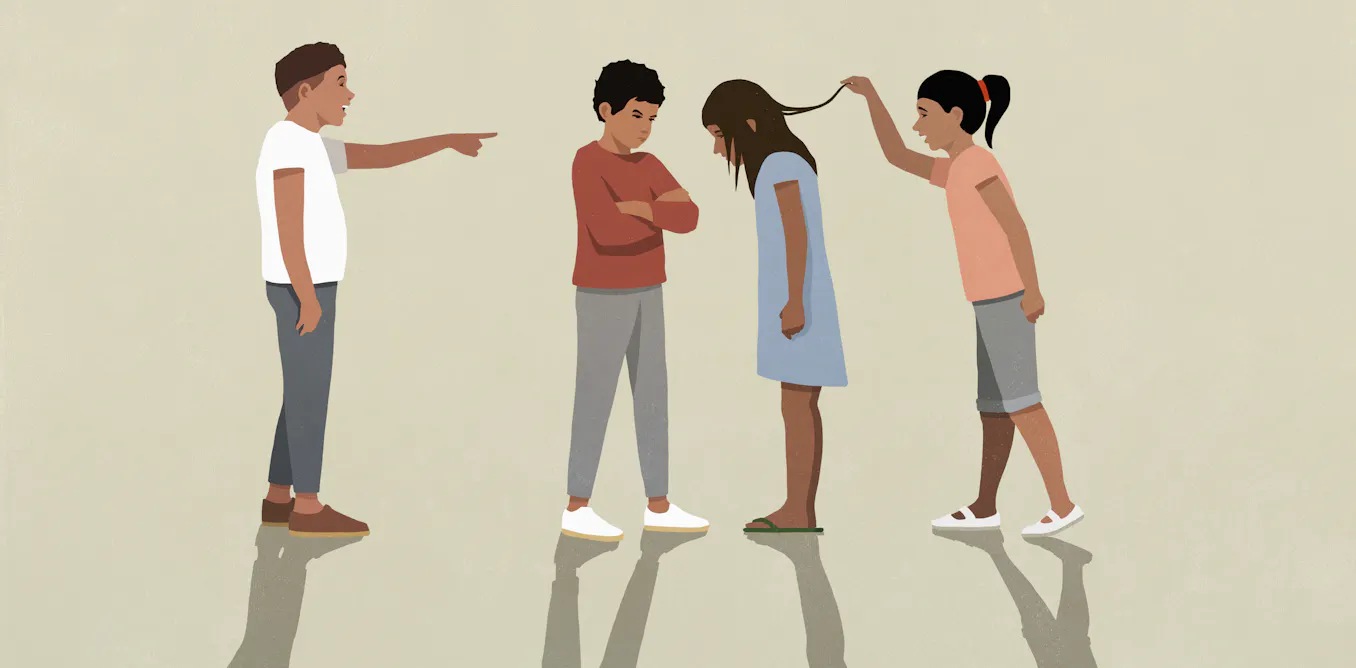
There's a particular flavor of fury reserved for the moment a kid blows up, gets quietly walked down to the office, and then strolls back into the room forty minutes later looking like they just returned from a spa. No visible dent. No discernible weather system passed through. And the rest of the class watched the whole thing evaporate.
If that scene makes a small vein in your forehead announce itself, you are in good company — and you are not crazy.
🔈 But first, this week's sponsor is for those who want to learn more about AI:
Become An AI Expert In Just 5 Minutes

If you’re a decision maker at your company, you need to be on the bleeding edge of, well, everything. But before you go signing up for seminars, conferences, lunch ‘n learns, and all that jazz, just know there’s a far better (and simpler) way: Subscribing to The Deep View.
This daily newsletter condenses everything you need to know about the latest and greatest AI developments into a 5-minute read. Squeeze it into your morning coffee break and before you know it, you’ll be an expert too.
Subscribe right here. It’s totally free, wildly informative, and trusted by 600,000+ readers at Google, Meta, Microsoft, and beyond.
And now back to making you an even better teacher. ⬇
Noteworthy News

It Feels Like Nothing Happened
Here's the thing nobody tells you in teacher's college: most consequences happen off-stage.
The conversation with the VP, the call home, the restorative chat at lunch, all of it occurs in some back room the class never sees. So from where you and twenty-eight other kids are standing, the math looks brutally simple: kid did the thing, kid left, kid came back unbothered. Cause with no visible effect.
And that's maddening, because an invisible system genuinely feels like no system at all. You're not being petty when this gets under your skin. You're noticing a real gap; the gap between justice that technically happened and justice the room can actually perceive. Those are not the same thing, and your brain is right to flag it.
So before any fix, let's just sit in the validation for a second: the frustration is information, not a flaw in your character. It's your nervous system telling you that something about the feedback loop in your room is broken. Good. Diagnosis first, prescription later.
The Frustration Is Two Wishes in a Trench Coat

Now the move. That single hot feeling is actually two completely different wishes sharing one coat.
Wish one is transparency: you want consequences to be predictable and knowable, so that everyone (you included) understands what happens when a line gets crossed.
Wish two is publicity: you want everyone to see the kid get got. Same coat, very different creatures. And almost all the day-to-day misery comes from mistaking the second wish for the first.
Because here's the quiet trap with the publicity half. Public call-outs tend to escalate, not settle. The kid who's already dysregulated now has an audience, and the kid who's mastered the art of the shrug? They've just beaten you in front of the whole room, on camera, for free. You've handed your authority to whoever has the best poker face — and that is rarely the adult holding the chalk.
Transparency, on the other hand, asks nothing of the kid's reaction. It just needs to be visible as a system. Which, conveniently, is a thing you can hang on a wall.
The Posted Ladder
So here's the tomorrow-morning, zero-budget version. Make one slide. Put four named rungs on it. Tape it to the wall. That's the whole capital expenditure.
The rungs are yours to name, but the shape is something like:
Rung 1 — the reminder (a quiet, private cue), Rung 2 — the check-in (a brief one-on-one, "let's reset"), Rung 3 — the reset (a short break, a move, a breather), and Rung 4 — the loop-in (the call home or the office, now fully expected by everyone).
The magic isn't the rungs themselves. It's that they live on the wall instead of in your head, where you've been improvising them under pressure roughly forty times a day.
And then the one technique that makes the whole thing hum: narrate the rung, not the kid. Not "Tyler, that's it, you're done" but "Okay, that's a rung-two move — let's check in." You're naming a step on a ladder everyone can see, not delivering a verdict on a human being.
The bonus: it has to apply identically to your sweetest kid and your most exhausting one. Same ladder, same words, no exceptions. The fairness is the feature, and the kids will clock instantly whether you mean it.
A Sanity Strategy in a Discipline Strategy's Clothes

Here's the reframe worth keeping. Transparency was never actually about putting a student on display. It was about you not having to invent justice from scratch every single time something goes sideways. The ladder isn't a device for making kids feel the weight of their choices in front of an audience. It's a device for making sure you don't have to hold a courtroom in your head between teaching fractions and finding someone's missing gym shoe.
Which means the posted ladder is a bit of a magic trick. It looks like a discipline strategy with rungs, consequences, the whole apparatus. But it's really a sanity strategy in disguise. The thing that was genuinely draining you was never the kids' behavior on its own. It was the decision. The forty tiny rulings a day, each one improvised, each one second-guessed at 9 p.m. The ladder retires the judge. You just point at the wall.
Post the Ladder First
You were never the problem here. You don't need a bigger personality, a scarier voice, or a more theatrical sense of doom. You needed one fewer decision to make in the heat of the moment — and now it's hanging on the wall where the whole room can see it.
So this week, before you draft that long text to the group chat about That One Kid: post the ladder first. Give the room a system it can actually see. The vein in your forehead has earned the rest. Especially at this point in the school year.
WHAT DO YOU THINK?
We would LOVE to hear from you!
Reply to this email, or send us a message on Instagram! We’re here to walk with you in these crazy times!
Part of what makes The PEN Weekly community so special is the fact that our readers are teachers from around the world! We’re not going to lie, we think that’s pretty darn cool!
We’ll see you again on Wednesday 🍎
Share this newsletter!
Do you know someone who would appreciate reading the PEN? Share this newsletter with them! Our goal is to reach as many teachers as possible, and to build a community of teachers supporting teachers.
