- The PEN Weekly
- Posts
- The best growth starts with a wobble.
The best growth starts with a wobble.
Also: your summer to-do list just got shorter.

Andre Violante
June 17, 2026 • Estimated Reading Time: 4 minutes


MAKING IT EASIER TO BE A BETTER TEACHER
Most of us spend a surprising amount of time trying to remove struggle.
We simplify directions, offer hints, break tasks into smaller pieces, and step in before frustration takes over. Sometimes that's exactly what students need. Other times, a little challenge is where the learning happens.
This week's Tech Tool helps tackle overwhelming tasks one small step at a time, while this week's Brainy Bit research find explores why letting kids wobble, stumble, and recover may be helping them more than we realize.
You're about to become an even better teacher in the next 4 minutes.
🔉But first, this week's sponsor is for teachers who'd like AI explained without a 47-minute YouTube video.
Become An AI Expert In Just 5 Minutes

If you’re a decision maker at your company, you need to be on the bleeding edge of, well, everything. But before you go signing up for seminars, conferences, lunch ‘n learns, and all that jazz, just know there’s a far better (and simpler) way: Subscribing to The Deep View.
This daily newsletter condenses everything you need to know about the latest and greatest AI developments into a 5-minute read. Squeeze it into your morning coffee break and before you know it, you’ll be an expert too.
Subscribe right here. It’s totally free, wildly informative, and trusted by 600,000+ readers at Google, Meta, Microsoft, and beyond.
And now, back to making you an even better teacher. ⬇️
BRAINY BIT

Let Them Wobble: The Science of Risky Play
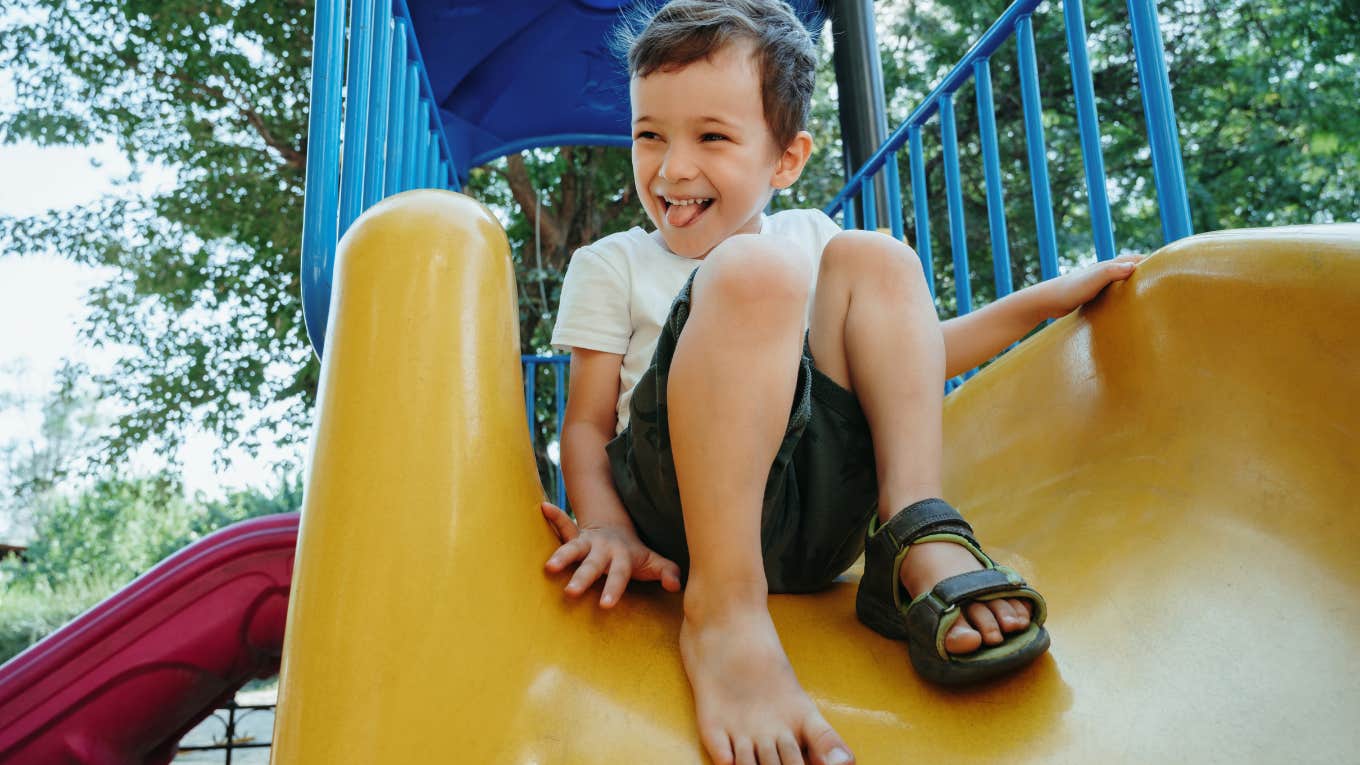
With summer and warmer weather upon us, the chance of students playing outside is about to spike, and so is the chance they'll come home with a scraped knee.
TLDR: A cross-country VR study of 424 kids found that children who took more playground risks were more likely to fall, but also crossed a busy virtual street faster and just as safely. Wobbly kids might be quietly building better judgment.
The Study: The importance of risky play
Researchers put 424 kids ages 7 to 11, from Norway and Canada, into VR headsets and a virtual playground with balance beams, narrow pillars, and ledges up to 1.5 meters high.
Kids got three minutes to climb, run, and explore freely, while researchers tracked their speed, risky pillar visits, and time spent in higher zones.
Next, the same kids crossed a busy virtual street with bikes and cars, while researchers measured how long they waited and how many close calls or hits they had, testing whether playground bravery carries over to traffic smarts.
The Results:
Norwegian kids scored significantly higher on risk willingness than Canadian kids. That bravery had a cost: every point up on the risk scale meant 78% higher odds of falling, and 21% took a tumble overall.
But riskier kids were also 68 seconds faster at deciding when to cross traffic, with no extra hits or close calls. 27% of all kids crossed safely every single time.
In YOUR Classroom:
With outdoor time shrinking in many boards and districts, this study suggests letting kids wobble a bit more at recess might quietly build the judgment they need everywhere else.
Here’s how these results can impact your classroom approach this week:
Strategies That Work:
Add a wobble zone: bring balance beams or stepping stones to recess so kids practice safe risk daily.
Debrief the fall: ask what they would try next time, turning a tumble into a quick risk lesson.
Cheer shaky tries: treat a wobbly first attempt at a hard problem like a kid wobbling on the beam or playground.
Letting kids tumble a little now might build the real-world judgment they'll need later, and that same wobble-and-recover logic doesn't have to stay on the playground.
A kid raising their hand with a half-formed guess or turning in a messy first draft is doing the classroom version of balancing on the beam, so maybe it's worth cheering the wobble there too.
🚀 Noteworthy News
“The secret of getting ahead is getting started.”

TECH TOOL
Break It Down Before Summer Breaks You
Summer's close enough for us teachers to taste (or already here for some of you), but first there's the mountain we've been avoiding: report cards, the supply closet disaster, maybe our own at home to-do list.
This week, we look at an AI tool that actually does something new (instead of just speeding up what you can already tackle).
The Solution: Magic ToDo
Magic ToDo lives inside Goblin Tools, a free web app (also available on your phone) built for busy and/or neurodivergent brains that get stuck on big, vague tasks. Type in something dreadful, like "clean the garage," and it breaks it into doable, realistic steps. A spiciness slider controls how detailed that breakdown gets.
Each task gets an emoji category, plus drag-to-reorder, subtasks, and a time estimate. No account is needed on the web, and your list can sync across devices or export into other list keeping tools.
Is This For YOUR Classroom?
This is a clear yes for personal use and for helping students chunk projects. Just know the breakdowns come from a general AI model, so they can feel generic and won't reflect your specific class. The web version is free, and since there's no teacher dashboard, if you are going to use it in your classroom come next year, demo it together with your students first.
Strategies That Work:
Project Chunking: Drop in a big assignment like "research paper" and let students follow the AI's step-by-step breakdown, perfect for IEP and 504 goals.
Summer Survival: Finally tackle "clean the garage," "plan the road trip," or "get back into running" by turning each scary task into a satisfying checklist.
Dreaded Admin Days: Use the spiciness slider to break report card comments, seating charts, or classroom library reorganizing into short, 10-minute bursts.
Magic ToDo won't clean your home or classroom for you, but it'll finally tell you where to start, and that's half the battle.
Crossing things off never felt so good.
WHAT DO YOU THINK?
We would LOVE to hear from you!
Reply to this email, or send us a message on Instagram! We’re here to walk with you in these crazy times!
Part of what makes The PEN Weekly community so special is the fact that our readers are teachers from around the world! We’re not going to lie, we think that’s pretty darn cool!
We’ll see you again on Monday 🍎
Do you know someone who would appreciate reading the PEN? Share this newsletter with them! Our goal is to reach as many teachers as possible, and to build a community of teachers supporting teachers.
References
Today’s newsletter adapts information from the following sources:
Tech Tool:
Goblin Tools. (n.d.). Magic ToDo. https://goblin.tools/todo
Brainy Bit:
Brussoni, M., Sandseter, E. B. H., Sando, O. J., Kleppe, R., Zeni, M., & Bundy, A. (2026). The developmental importance of risky play: A cross-national virtual reality study. Journal of Environmental Psychology, 112, 103062. doi:10.1016/j.jenvp.2026.1030625
Reply