- The PEN Weekly
- Posts
- That One Student Who Sticks To You Like Glue...
That One Student Who Sticks To You Like Glue...
Why being the "favorite teacher" might be the most dangerous trap in the building.

Chris Fernandes
January 19, 2026 • Estimated Reading Time: 4 minutes


MAKING IT EASIER TO BE A BETTER TEACHER
Every school building has a "Velcro Student." You know the one. They arrive early to help you set up chairs. They spend lunch quietly eating a sandwich in the back corner of your room while you try to grade papers. They linger after the bell rings, asking questions that definitely could have been an email—or simply not asked at all. To be the recipient of this devotion feels like a badge of honor. It signals that you have successfully created a "Safe Space™" and that you are officially a Cool Teacher.
However, there is a fine line between being a mentor and being a crutch. While providing a sanctuary is a noble part of the job, allowing a student to permanently attach themselves to your hip often masks a growing dependency issue. It starts as a compliment ("You're the only teacher who gets me!"), but if left unchecked, it spirals into a boundary nightmare that drains your energy and—more importantly—stunts their growth.
🔉 But first, a word from today’s sponsor
Get Real Estate Training from Wharton Experts

Gain the skills top firms demand with the Wharton Online + Wall Street Prep Real Estate Investing & Analysis Certificate.
In 8 weeks, learn from leaders at Blackstone, KKR, Ares, and more while analyzing real deals.
Join 5,000+ graduates. Save $300 with code SAVE300.
🚀 Noteworthy News
👉 Want to change someone’s behavior? Understand how the Brain builds habits according to neuroscience.
It’s Not About the Shoes (It's About the Ego)
To be clear, we are not talking about the Kindergartner who needs help tying their shoes or the student in genuine crisis who needs a momentary reprieve. We are talking about the "Stage 5 Clinger"—the student who actively avoids peers, the cafeteria, and arguably "less cool" classes to bask in the glow of your validation. They have turned your classroom into a bunker against the world.
The uncomfortable truth is that teachers often let this happen because it feeds the ego. The "Savior Complex" is a real and heady drug. It feels incredible to be the "only one" a student trusts. It validates the long hours and the low pay to feel indispensable. But this feeling is a siren song. When a teacher becomes the sole emotional outlet for a student, it creates a bottleneck. If a student believes they cannot function without you, you haven't taught them resilience; you've taught them dependency.
The "Protracted Adolescence" Phenomenon
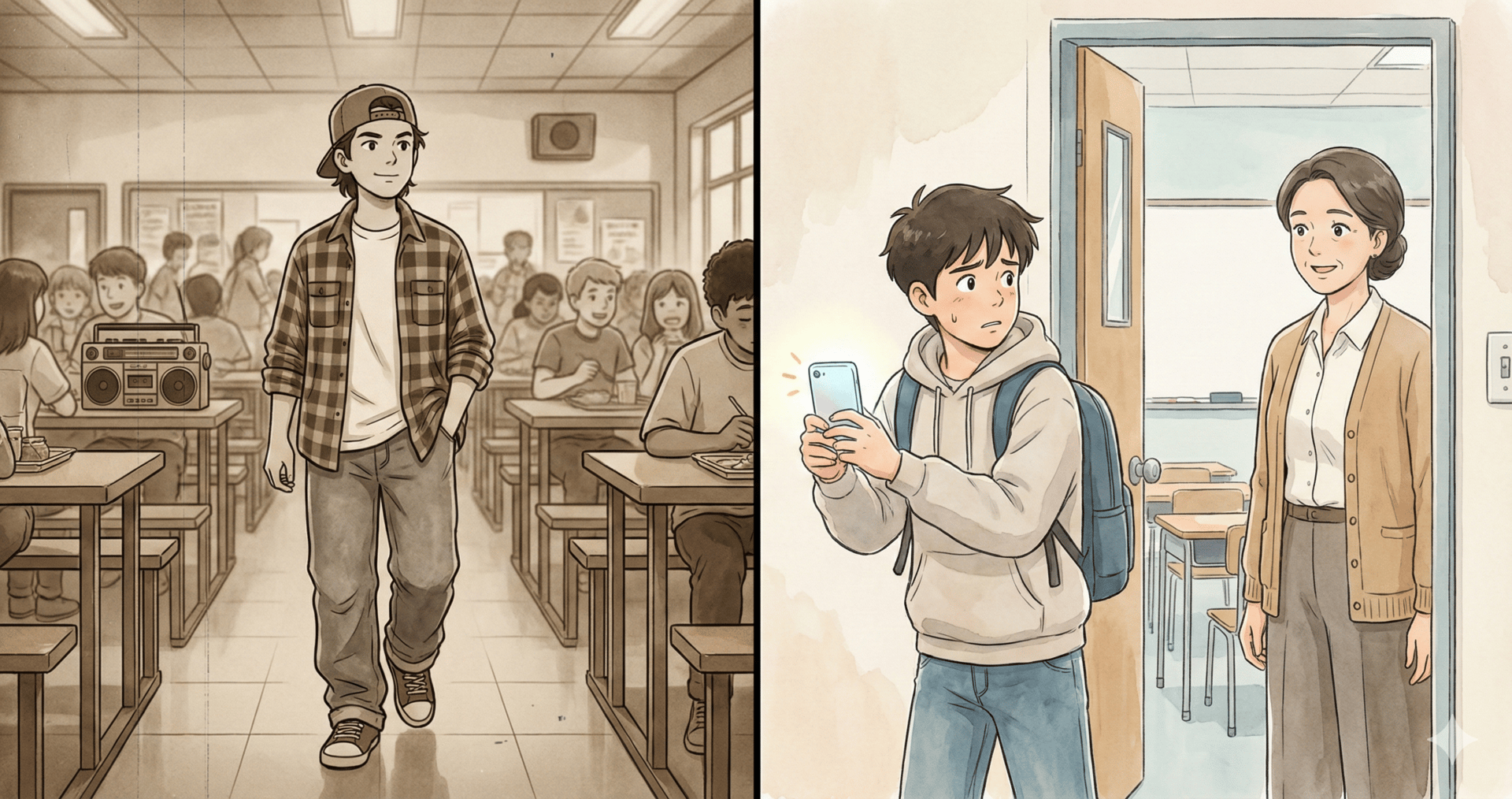
This clinging behavior isn't just about personality; it’s a symptom of a larger generational shift. Jean Twenge’s research in iGen highlights that modern adolescents are reaching independence benchmarks—getting a driver's license, dating, or walking to the store alone—significantly later than previous generations. The modern student is more risk-averse and less comfortable with the friction of the "real world" (or the cafeteria, which is basically the same thing).
When a student hides in your room, they are often avoiding the necessary discomfort of socialization. They are dodging the awkwardness of finding a table at lunch or the boredom of a study hall. By allowing them to stay, teachers inadvertently act as enablers for "protracted adolescence." The classroom becomes a shield against the very social interactions that build grit and social intelligence.
You Are a Teacher, Not a Support Animal
There is also a collegial reality check required here: You are a teacher, not an emotional support animal. If a student is cutting Math or English to hang out in your room because "Mr. Smith is mean," and you allow it, you are not being supportive; you are being subversive. You are silently confirming to the student that avoiding difficulty is a valid strategy and that your colleague’s class is optional.
Boundaries are a form of care. This is a mantra that needs to be repeated until it sticks. It is easy to be the "nice" teacher who says yes. It is much harder, but much more loving, to be the teacher who says, "You need to be in class." Allowing a student to hide prevents them from building the emotional calluses needed to handle boring meetings, difficult bosses, and awkward lunches later in life. If they can't handle Mr. Smith's monotone lectures now, how will they handle a 90-minute Zoom call in ten years?
The Strategy: "Nutritious Rejection"

So, how do you peel the Velcro without tearing the fabric? You use a strategy called "Nutritious Rejection." The goal is to reject the behavior (hiding/avoidance) while affirming the student. You must be warm, but immovable. You are a lighthouse, not a harbor; you are there to guide them, not to keep them docked forever.
Practical scripts are essential here because the "Velcro" student is often sensitive to perceived rejection. Try this: "I love that you feel safe here, and I always enjoy our chats. But my job is to help you be successful out there, not just in here. You need to go to Math/Lunch/Recess. I will see you at [scheduled time]."
This requires consistency. You must be a broken record. If you cave once, the timer resets. The door must be physically closed during prep periods. "Office Hours" are a great concept to introduce—let them know you are available only on Tuesdays at lunch. This turns your attention into a scheduled, respected resource rather than an all-you-can-eat buffet.
The Ultimate Goal: Obsolescence
There is a philosophy from the film Nanny McPhee that applies perfectly to teaching: "When you need me but do not want me, then I must stay. When you want me but no longer need me, then I have to go." The ultimate metric of a teacher's success is not how much a student needs you, but how much they don't.
We are in the business of making ourselves obsolete. We build the scaffolding so the building can stand alone, and then we take the scaffolding down. Pushing a student out of the nest—or out of your classroom door and into the terrifying hallway—is the most loving thing you can do. It’s the only way they’ll ever realize they have wings.
WHAT DO YOU THINK?
We would LOVE to hear from you!
Reply to this email, or send us a message on Instagram! We’re here to walk with you in these crazy times!
Part of what makes The PEN Weekly community so special is the fact that our readers are teachers from around the world! We’re not going to lie, we think that’s pretty darn cool!
We’ll see you again on Wednesday 🍎
Do you know someone who would appreciate reading the PEN? Share this newsletter with them! Our goal is to reach as many teachers as possible, and to build a community of teachers supporting teachers.
Reply